
Business
SEC and BlackRock’s ETF Talks: Paving the Way for Crypto’s Mainstream Future

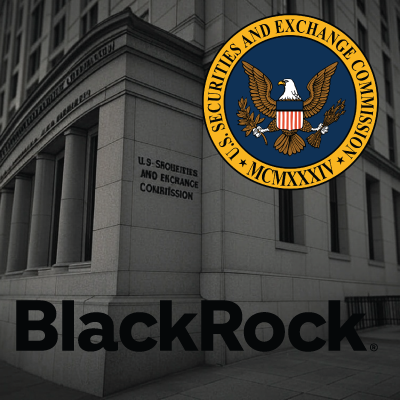
In a significant development for the cryptocurrency industry, BlackRock, the world’s largest asset manager, met with the U.S. Securities and Exchange Commission’s (SEC) Crypto Task Force on May 9, 2025, to discuss regulatory frameworks for cryptocurrency exchange-traded products (ETPs), including staking, tokenization, and ETF approval standards.
This meeting, coupled with ongoing discussions involving other industry giants like Fidelity and Nasdaq, signals a potential shift in the regulatory landscape for crypto ETFs.
As the SEC engages with traditional finance heavyweights, the outcomes of these talks could reshape the crypto market, drive institutional adoption, and influence asset prices.
What Happened in the SEC-BlackRock Meeting?
According to a public memorandum, BlackRock representatives, including senior officials from regulatory affairs, legal, digital assets, and ETF markets, met with the SEC’s Crypto Task Force, led by Commissioner Hester Pierce, to address key regulatory issues. The discussions focused on several critical topics:
- Staking in ETFs: BlackRock explored the possibility of incorporating staking features into crypto ETPs, particularly for proof-of-stake assets like Ethereum. Staking allows investors to earn additional yield by locking up assets to support blockchain networks, but it raises regulatory concerns about liquidity and investor protections. BlackRock emphasized the need to balance innovation with compliance, noting that Ethereum ETFs are “incomplete” without staking capabilities.
- Tokenization of Securities: The meeting addressed how traditional assets could be represented as digital tokens on blockchains, aligning with BlackRock’s tokenized fund, the BlackRock USD Institutional Digital Liquidity Fund (BUIDL). Tokenization could enhance transparency and efficiency in securities trading but requires clear regulatory guidelines.
- ETF Approval Frameworks: BlackRock reviewed its digital asset offerings, including the iShares Bitcoin Trust (IBIT) and the proposed iShares Ethereum Trust (ETHA), seeking clarity on how current and future products can comply with federal securities laws, particularly under Section 6(b) of the Exchange Act, which ensures market integrity and investor protections. The firm proposed interim standards for crypto ETP issuers to streamline approvals.
- Options and Liquidity: BlackRock raised questions about options trading on crypto ETFs, position limits, and liquidity thresholds, building on the SEC’s recent approval of options trading for spot Ethereum ETFs, including BlackRock’s.
This meeting follows a prior session on April 1, 2025, where BlackRock discussed in-kind redemptions for crypto ETPs, indicating a sustained push for regulatory clarity. The involvement of new SEC Chair Paul Atkins, who has expressed optimism about digital assets’ “huge benefits,” suggests a more crypto-friendly regulatory approach compared to the tenure of former Chair Gary Gensler.

Why This Matters
BlackRock’s engagement with the SEC is a strong signal of traditional finance’s deepening integration with cryptocurrencies. With over $11.48 trillion in assets under management and $5.4 billion in Bitcoin-related equities, BlackRock’s influence is unmatched. Its iShares Bitcoin Trust (IBIT) generated $32 million in Q1 2025 revenue, and its crypto ETFs attracted $3 billion in inflows despite market downturns, underscoring robust institutional demand.
The discussions come amid a surge in crypto ETF applications, with over 70 filed since April 21, 2025, covering assets like Bitcoin, Ethereum, Solana, and others. The SEC’s willingness to engage with BlackRock and other stakeholders, including the Crypto Council for Innovation’s Proof of Stake Alliance, indicates a potential evolution in regulatory frameworks, which could unlock new investment opportunities.
Potential Market Impact
The SEC-BlackRock meeting could have profound effects on the cryptocurrency market, influencing investor sentiment, asset prices, and institutional participation. Here’s a breakdown of the potential impacts:
- Accelerated ETF Approvals
Clearer regulatory guidelines could pave the way for approving spot ETFs for altcoins like Solana, Cardano, or NEAR, following the precedent set by Bitcoin and Ethereum ETFs. Approval of staking-enabled ETFs would enhance yield opportunities, attracting more institutional capital. For example, if Ethereum ETFs gain staking capabilities, ETH’s price could see upward pressure due to increased demand and reduced circulating supply. However, delays or rejections could dampen market enthusiasm, as seen in past ETF cycles. - Price Volatility and Bullish Sentiment
Historically, ETF-related news has driven significant price movements. Bitcoin’s price surged after its spot ETF approvals, and Ethereum followed a similar trend. Posts on X reflect bullish sentiment, with users like @Crypto_Cat_John suggesting that BlackRock’s involvement signals a “hostile takeover” of crypto by traditional finance, potentially driving prices higher as institutions buy in. NEAR, Solana, and other altcoins could experience speculative rallies if ETF approvals expand. However, regulatory uncertainty could trigger short-term volatility. - Institutional Adoption and Market Legitimacy
BlackRock’s push for regulatory clarity legitimizes cryptocurrencies as an asset class, encouraging other institutions to allocate capital. The firm’s tokenized fund (BUIDL) and ETF offerings demonstrate a vision to integrate blockchain with traditional finance, which could inspire competitors like Franklin Templeton and Robinhood to accelerate their crypto initiatives. This trend could reduce the stigma around crypto, attracting conservative investors. - Tokenization as a Market Catalyst
Tokenization could transform securities trading by improving transparency and settlement speed. If the SEC provides a clear framework, tokenized funds could proliferate, bridging traditional and decentralized finance. This could boost demand for blockchain-native assets, benefiting layer-1 protocols like Ethereum, Solana, and NEAR. - Regulatory Risks and Challenges
Despite optimism, regulatory hurdles remain. The SEC’s caution, driven by concerns over market manipulation and investor safety, could delay staking or altcoin ETF approvals. Bloomberg analyst James Seyffart noted that the SEC might hold off on staking approvals until October 2025, despite interim deadlines. Additionally, political changes, such as the Trump administration’s influence, could introduce uncertainty, as seen in recent ESG rule changes affecting BlackRock.
What’s Next?
The SEC’s Crypto Task Force is scheduled to hold a roundtable on tokenization today, May 12, 2025, with BlackRock, Fidelity, and Nasdaq in attendance, and Chair Atkins delivering a keynote. This event could provide further insights into the SEC’s stance. Investors should monitor updates from the SEC, BlackRock’s public statements, and market reactions on platforms like X, where sentiment is cautiously optimistic.
For crypto investors, the potential approval of staking-enabled ETFs or altcoin ETFs represents a chance to diversify portfolios through regulated vehicles. For the industry, these developments could mark a turning point, bringing crypto closer to mainstream acceptance.
The SEC’s meeting with BlackRock underscores the growing convergence of traditional finance and cryptocurrencies. By addressing staking, tokenization, and ETF regulations, BlackRock is pushing for a regulatory framework that could unlock billions in institutional capital, enhance market legitimacy, and drive price appreciation. However, regulatory caution and competitive dynamics pose risks. As the SEC’s tokenization roundtable unfolds, the crypto market is watching closely for signs of adoption and clarity.
What are your thoughts on BlackRock’s role in shaping crypto regulations? Will staking in ETFs be a game-changer?



